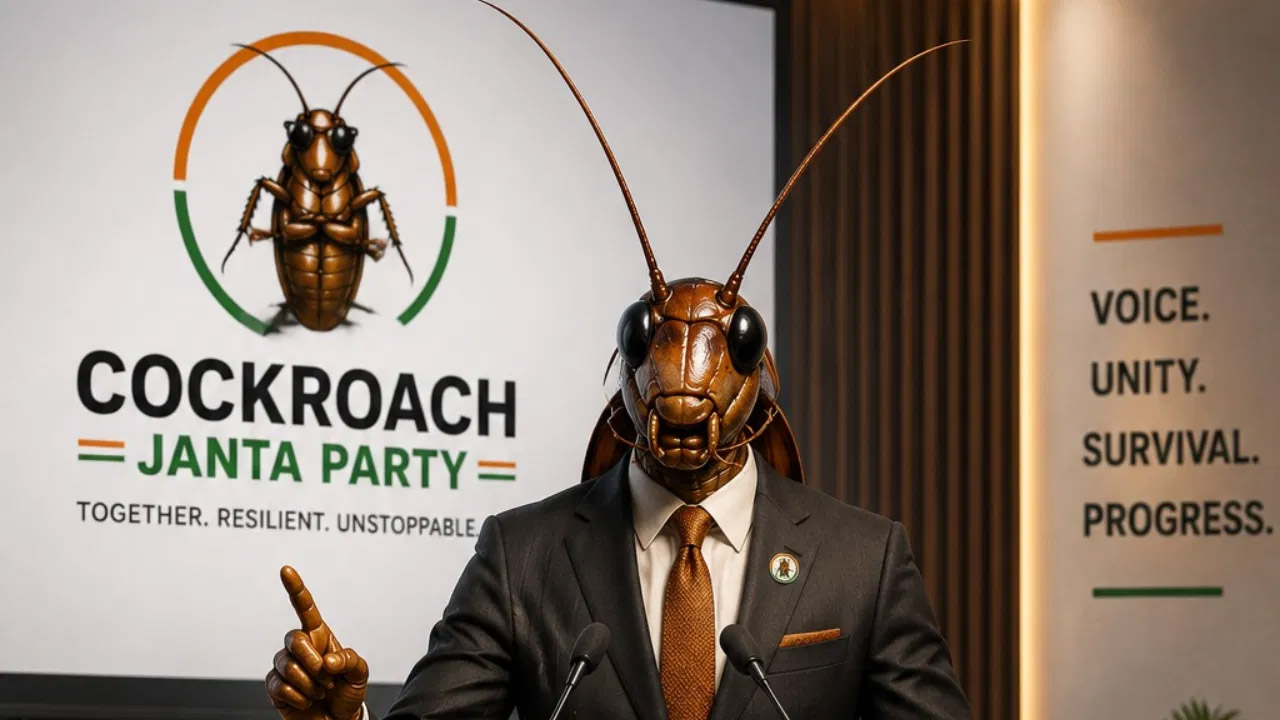
A bizarre yet powerful new internet phenomenon is rapidly capturing attention across India’s social media landscape — the “Cockroach Janta Party” (CJP).
What started as a meme-based reaction to controversial remarks allegedly comparing unemployed youth to “cockroaches” has transformed into one of the country’s fastest-growing viral political satire movements online.
The movement was reportedly launched by Abhijeet Dipke, a former social media strategist linked to the Aam Aadmi Party, shortly after outrage erupted over comments made during a Supreme Court hearing. The remarks triggered a wave of anger, sarcasm and digital activism among young Indians frustrated over unemployment and economic pressures.
Within days, the Cockroach Janta Party exploded across Instagram and other social media platforms, with meme pages, parody accounts and supporter communities rapidly emerging online. The movement’s sarcastic slogan — “Voice of the Lazy & Unemployed” — struck a chord with many young users who viewed it as a form of protest against being dismissed or ignored.
The phenomenon quickly evolved beyond comedy, becoming a symbol of wider dissatisfaction among sections of India’s youth facing job insecurity, rising competition and economic anxiety.
Political analysts say the viral rise of the movement highlights the growing influence of meme culture in shaping public conversations and political engagement among Gen Z audiences. While the Cockroach Janta Party is not a formally recognised political party, its online popularity demonstrates how digital satire is increasingly becoming a tool for social and political expression.
Critics, however, argue that the movement risks trivialising serious economic challenges, while supporters see it as an unconventional but effective way of drawing attention to youth frustration and unemployment.
Whether the “Cockroach Party” fades as a temporary internet trend or evolves into a larger social movement, it has already exposed the growing power of online culture in influencing political narratives in modern India.